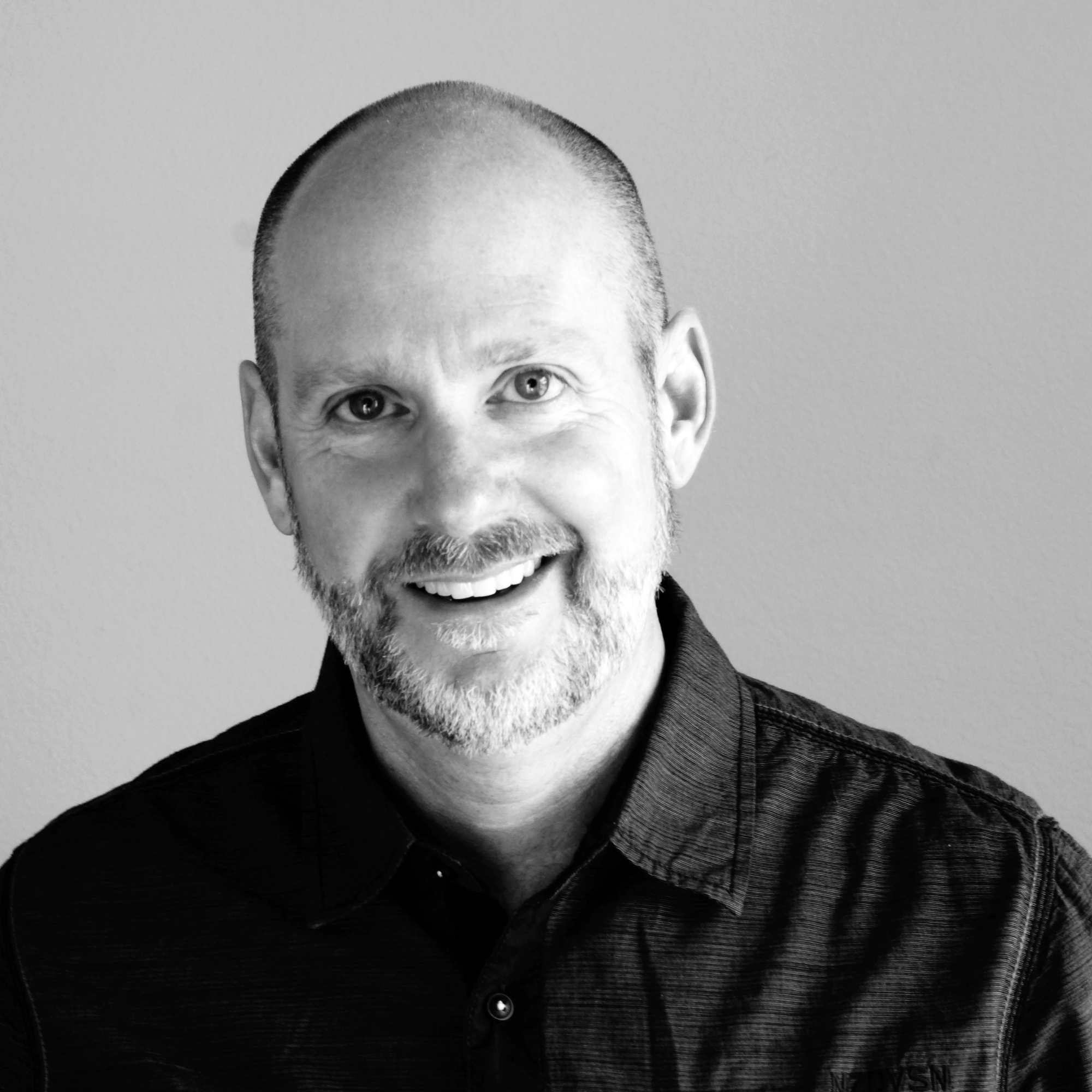
Hosted By

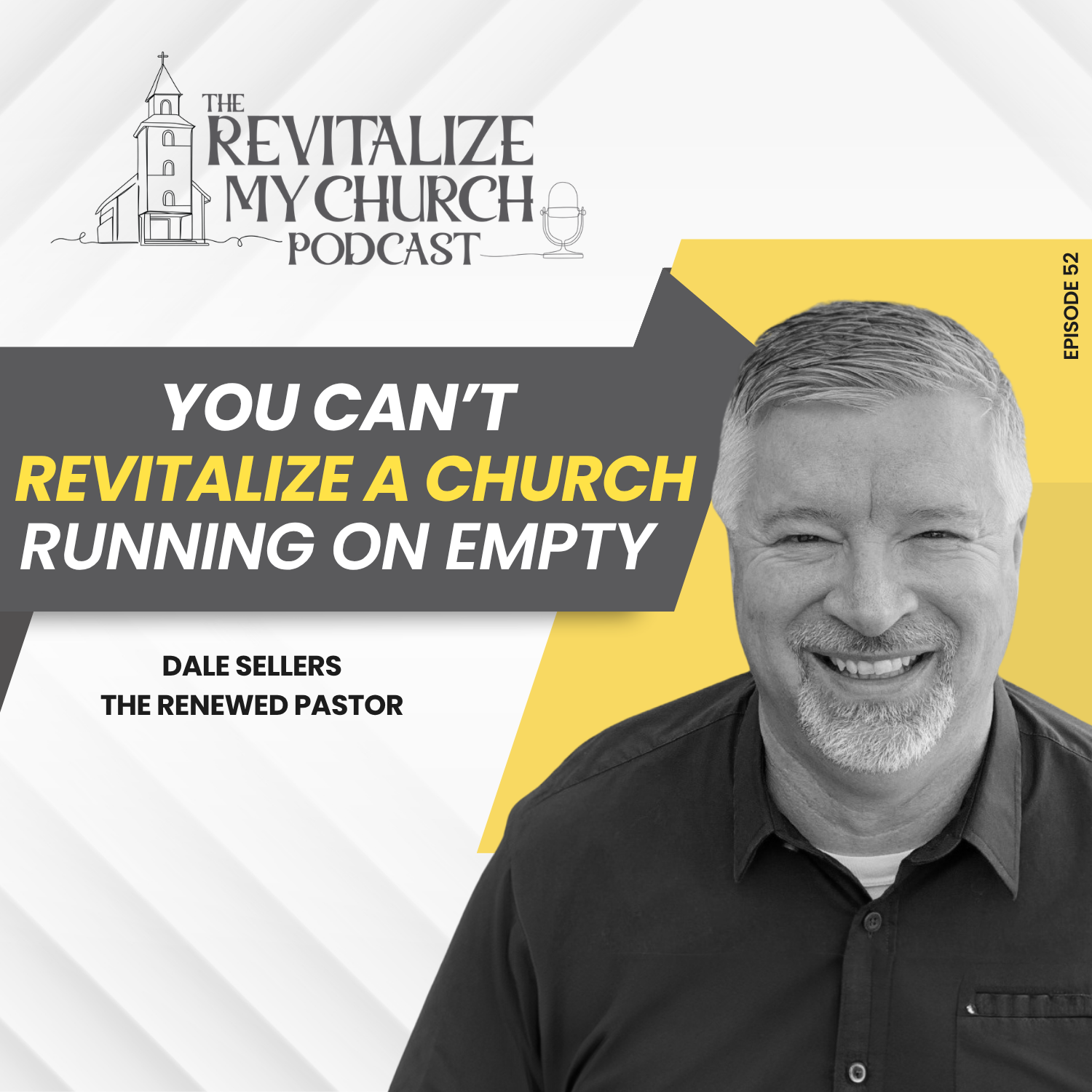
Dale Sellers returns as the first repeat guest in the show's history to announce that 95 Network is becoming The Renewed Pastor.
Most pastors Dale has met across four decades of ministry are discouraged, and seminary training rarely prepares them for the part of the job that actually wears them down: leading people.
Fewer than ten percent of pastors in Dale's conference rooms have ever raised a hand to say they take a real day off every week.
The two issues surfacing most in pastors right now are the refusal to Sabbath and confusion about identity and calling.
When a pastor's gifting does not match what the church needs in its current season, the natural default is to hide the gap, and hiding is exhausting.
Many moral failures are less about wanting to blow up a life and more about a leader desperate to get off the merry go round.
The Renewed Pastor Pathway is a year long, one on one coaching track built around soul care, identity and context, vision and clarity, and leadership development with a succession plan.
The goal is a thousand healthy pastors over the next ten years, with scholarships available for those who cannot cover the cost.
If you are leading a church that needs to be revitalized, you have probably built a list of things that need to change. The building. The website. The systems. The volunteer pipeline. Somewhere on that list, usually last, is you.
In this episode Bart Blair sits down with Dale Sellers, who has spent his ministry life serving small and midsize churches and who has now decided to spend the next decade of it on one thing: helping pastors get healthy. Dale is the first repeat guest in the history of the Revitalize My Church podcast, and he came back to share both the story behind his own collapse and the reason his ministry is changing its name.
You will hear why Dale thinks the training pipeline sets pastors up to be blindsided. You will hear the moment a board member put a hand in his face and told him to stop talking about his struggles. You will hear what he sees when a pastor is not as healthy as they think they are, and what he is building to help. If you have been running on empty and telling yourself the church needs you too much for you to stop, this conversation is for you.
Dale and his wife Regina spent the first decade of their marriage traveling with music groups, playing somewhere in the neighborhood of eleven hundred concerts in churches across more than thirty states. He was in his twenties, full of energy, and could not understand what he kept seeing.
Almost every pastor he met was discouraged. Church after church, state after state, the same weariness in the room.
He did not understand it until he took a local church role. Within two weeks, he says, he figured it out.
The road is not the same as the pew. As he puts it, when you travel you blow in, you blow up, and you blow out. Ministry in one place with the same people week after week is a different job entirely.
The training gap is real. Pastors are taught to preach, to handle Greek and Hebrew, to work through hermeneutics. Very few are taught how to lead people.
That gap eventually caught up with Dale personally. He pastored a church that went from thirty to three hundred and then back down to one hundred fifty after a split in year eight. The stress of it landed him in quadruple bypass surgery at fifty three, which his surgeon attributed to stress rather than family history.
"The church is the only hope for the world. There is no plan B. So we have got to help pastors be healthy to get the church healthy."
95 Network was founded in 2014 by Jim Powell, a pastor in Peoria, Illinois with a passion for the small and midsize church. Dale joined the board, then took over leadership in 2017, and became executive director in July of 2018.
The name came from church size statistics at the time.
The original math. Roughly ninety five percent of American churches were under five hundred, eighty seven percent were under two hundred, and seventy five percent were under one hundred.
The problem with naming a ministry after a percentage. The numbers move. The figure most cited now is that ninety two percent of American churches are under two hundred.
The bigger problem. If you have to explain your name every time you meet someone, and people keep hearing it as "nine to five," the name is working against you.
Over the years the ministry produced leadership resources, ran conferences, developed a one day planning intensive called Vision Day, and published a podcast with hundreds of episodes, all aimed at the churches that are the most numerous and the least resourced.
When Bart asks Dale what he looks for in a pastor who is less healthy than they think, Dale does not hesitate.
They will not Sabbath. They preach it, they teach it, they believe it, and they do not practice it.
The show of hands never breaks ten percent. In conference after conference, Dale asked who takes a literal day off every week. It has never been ten percent of the room.
It reveals what you believe about your own importance. If everything falls apart when you step away for a day, you have either built something unhealthy or you believe the church depends on you more than it does.
Silence is uncomfortable for a reason. Dale suggests some pastors stay busy precisely because quiet is where God gets a chance to correct them.
The phone made it worse. Evenings and weekends are now interruptible in a way they were not twenty years ago, and voicemail exists for a reason.
AI is the next version of the same trap. Used well it creates margin. Dale's concern, raised in a conversation with Ed Stetzer, is that pastors will simply fill the margin with more work.
"If you are listening right now and you do not Sabbath, you are already in trouble."
Dale tells a story from his own pastorate that explains a generation of silence. He asked a board member, a friend he hunted and fished with, out to lunch. He wanted to talk about what was happening inside him. No moral failure. No hidden sin. No plan to leave. Just honesty.
The man put his hand up in Dale's face and told him to stop.
"My life is a disaster and I need your life to be perfect. So I really do not want to know."
The message landed. Dale concluded he was not supposed to talk to anybody.
Groups did not help. Every fellowship he joined asked him to lead it. He had come for help, not another platform.
The pandemic cracked the door. For the first time, Dale says, pastors began admitting out loud that they were not doing well on the inside.
More are getting real help now. Counseling, marriage work, and honest conversation are more common than they were, though there is a long way to go.
Bart shares his own version of this from about fifteen years ago as a worship pastor at a growing church near Toronto. Things looked good on the outside. On the inside he had started fantasizing, every time he and his wife traveled, about never going home. He did not recognize it as depression at the time.
The second issue Dale sees rising fast is identity and calling. Recent Barna research shows pastors feeling somewhat better about themselves overall, and at the same time genuinely unsure about who God made them to be and how that fits the church they are actually serving.
The starter who cannot shepherd. Bart planted and led a church from zero to one hundred thirty five. When the church needed a stronger shepherd, his apostolic, gathering gifts stopped being what the moment required, and growth stalled.
The shepherd who cannot scale. Dale describes the mirror image: high compassion, high mercy pastors who get a church to sixty or eighty people and then cannot get past one hundred because they are buried in personal care.
Financial pressure makes it worse. Many of these churches need to cross the hundred mark just to remain viable, which turns a gifting gap into a survival question.
Hiding is the default response. When the church expects something you are not gifted to deliver, the instinct is to mask it, cover it, and create distraction. Dale says the exhaustion of that cover up is its own slow destruction.
The answer is a team, not a better pastor. No single leader carries every gift the church needs. Revitalization requires a multiplicity of gifts around the pastor.
Dale wrote Stalled out of his own story. From the outside his ministry looked full. Inside, he had concluded he was a disappointment to Jesus because he had never built a megachurch.
He did what the experts said. He applied what he learned from Bill Hybels, John Maxwell, and the Fuller Institute, and it did not produce what he had been told it would.
So he assumed he was the problem. He kept that conclusion to himself for years.
One conversation changed the trajectory. In 2014 he confessed the feeling to Tony Morgan, who asked him to write it up. The article, on thinking he would be further along by now, drew responses from pastors all over the country saying it described them exactly.
The measurement itself is borrowed. Dale argues that today's church still lives in the residue of the seeker and attractional movements, which taught a generation to measure success in numbers and budgets.
"When you compare yourself to everybody else, that is a bad treadmill to get on. It never stops."
Bart adds a distinction worth keeping. A megachurch pastor and a normal size church pastor share a title and almost nothing else. It is the difference between an academic with a PhD and a neurosurgeon. Both are called doctor. They got there differently and they do different work.
About a year and a half ago Dale sensed a clear shift. 95 Network had been running what he calls a shotgun approach, trying to help everyone, and too many of the people they reached were hunting for a silver bullet rather than doing the work. The new direction is narrower and deeper: help the pastors who actually want to be helped.
Effective September 1, 95 Network becomes The Renewed Pastor. The coaching track is called The Renewed Pastor Pathway.
Quarter one, soul care. Getting healthy internally, including the friendship deficit most pastors carry.
Quarter two, identity and context. A deep dive into what you were called to and how that fits the ministry you are actually in.
Quarter three, vision and clarity. Including how to adapt principles from larger church leaders into your own context rather than importing them wholesale.
Quarter four, leadership development and succession. Identifying who you hand things off to, and helping the church accept that a succession plan is normal and necessary.
Bart pushes for specifics, and Dale lays out the format.
Monthly one hour Zoom calls with your coach. One on one by default, with cohort options possible for groups who prefer that.
Physical materials. A printed booklet for each phase, plus online components.
An onsite visit. Somewhere around months seven through nine, a coach comes to you, meets your leaders, and helps the church assess where it is and where it is going.
Open to more than lead pastors. Staff members and volunteer leaders are welcome, including children's ministry leaders, with coaches available for both men and women.
There is a cost, and there is help. Dale is direct that people who have no skin in the game do not follow through. Underwriting is already in place to fund scholarships for pastors who cannot cover the full cost.
Every coach has scar tissue. Dale's criteria: they have seen the ugly side of ministry, been through the hard seasons, and in many cases paid a physical price for not caring for themselves.
Coaching begins rolling out this fall, with ten coaches lined up across the country and more joining.
Near the end, Bart names something he had been discussing with a group of pastors that same week. God's pleasure in you is not tied to your production for him. If the goals never get met, if the church never reaches the number you hoped for, God is not disappointed in you.
"Jesus is not keeping score."
Dale's closing hope for the pastors listening is not a bigger church. It is a marriage still intact, a family still connected, real friends, and a whole life outside the church bubble. Too many pastors, he says, live entirely inside that bubble, and it is not healthy.
When was the last time you took a full, literal day off? Not a slow day. A real one.
If you are not taking one, what do you believe would happen to your church if you did?
Where is the gap between how God has gifted you and what your church currently expects from you?
Are you spending energy hiding that gap? What is that costing you?
Who in your life knows how you are actually doing on the inside, and when did you last tell them the truth?
Whose ministry are you comparing yours to, and what would change if you stopped?
The Renewed Pastor, formerly 95 Network, at TheRenewedPastor.org
The Renewed Pastor Pathway, the year long coaching track
Stalled, Dale Sellers' book on ministry disappointment and recovery, available on Amazon
The Five Big Rocks of Church Revitalization, by Bart Blair &. Nathan Bryant
New episodes release on the 1st and 15th of every month. Subscribe wherever you listen to podcasts, and visit revitalizemy.church for more resources to help your church find its path toward renewal.
Episode 42: Show Notes TLDR: Key Takeaways The Oikos Principle works everywhere: 95% of people come to faith through relationships with the 8-15 people...
How to Leverage Christmas for Church Revitalization | Church Growth Strategies In this essential episode for church leaders, Bart Blair and Nathan Bryant share...
Ep.02 | Engines of Church Growth | Jim Brown In this episode of the Revitalize My Church podcast, host Bart Blair interviews Pastor Jim...